Quick answer: Sidewalk lights, also called vault lights, sidewalk panels, pavement lights, or vaulted sidewalks, are glass lenses set into load-bearing frames that bring daylight into the areas beneath city walkways. Popular from the 1860s to the 1930s, many fell into disrepair and were paved over.
Walk through almost any old downtown, and you might be stepping over a piece of forgotten engineering. Sidewalk lights were once a popular solution for lighting basements that electricity hadn’t reached yet, but as decades passed, many of them disappeared.
Circle Redmont® now manufactures modern vault light systems that bring the same daylighting idea up to current structural, safety, and waterproofing standards. This post is our definitive reference on vault lights, covering where they came from, how they work, why so many vanished, and how they’re engineered today.
Vault Lights, Sidewalk Lights, Pavement Lights: One Idea, Many Names
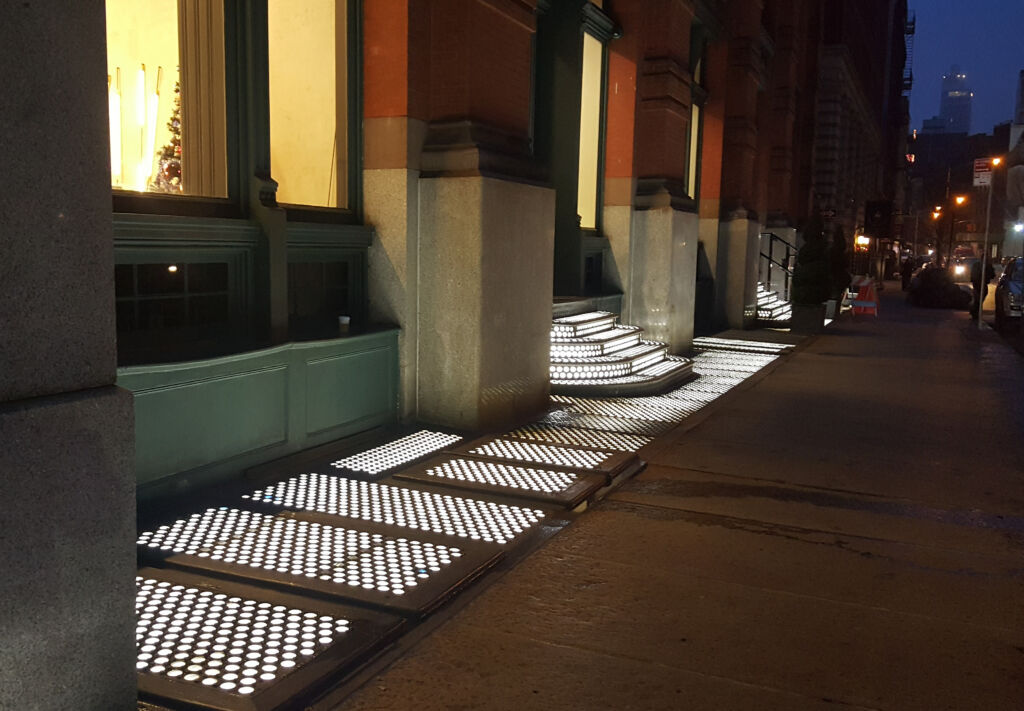
Sidewalk lights are glass lenses or prisms set into a cast iron, concrete, or steel frame that’s load-bearing. They let daylight pass from the street above into the space below, no electricity required.
The terminology shifts because different cities and eras use different terms for the same system. “Vault lights” refer to the sidewalk vaults they illuminate. “Sidewalk lights” and “pavement lights” describe where they sit underfoot. “Vaulted sidewalks” refers to the hollow sidewalk structure itself.
There are some related terms too: While a bit different in the details, ship deck prisms, prism transom tiles, and modern glass pavers all share the same core idea: moving daylight somewhere it couldn’t otherwise reach.
The Problem Sidewalk Lights Solved
In dense 19th-century cities, building owners often extended basements beneath public sidewalks for storage, coal delivery, or workshops. These sidewalk vaults had no natural light and no ventilation, and gas lamps or candles were both costly and a fire hazard.
Since daylight was the only cheap, safe light source, the fix was simple. Set glass directly into the pavement so sunlight could reach the vault below without giving up any walkable surface above.
A History of Sidewalk Vault Lights
Early Patents (1840s)
Thaddeus Hyatt’s mid-1840s patents for glass lenses set in iron frames are widely credited as the start of the commercial vault light industry.
The Golden Age (1860s–1930s)
Cast iron panels fitted with round or square glass “bullets” became standard in commercial districts, often installed alongside cast-iron building facades. Lens design evolved too; flat discs gave way to faceted prisms that redirected light sideways into the vault rather than straight down.
Why Some Surviving Vault Lights Are Purple
Glassmakers once added manganese as a decolorizer. Over decades, UV exposure oxidizes it, turning the glass violet. Later panels made with selenium tend toward amber, providing a useful clue for dating surviving examples.
Where They Survive
Vault lights can still be found in historic downtown cores and districts across the US, with well-known concentrations in neighborhoods like Manhattan’s SoHo and Tribeca and Seattle’s Pioneer Square.
Why Sidewalk Lights Disappeared
With the advent of electricity, cheap incandescent lighting removed the need for daylight in basements, and that alone ended most new installations. Time deteriorated the rest, as water infiltration rusted the iron frames and the steel supporting the vaulted sidewalks beneath them, leaving loose or broken lenses as trip and slip hazards.
Rather than repair aging panels, many cities and property owners simply poured concrete over them, leaving many vaults sealed or abandoned. Liability issues also arose over the years, and slip-resistance rules, structural capacity concerns, and right-of-way permitting pushed owners toward removal instead of restoration.
Restoring vs. Replacing Vault Lights Sidewalk Panels
Sound frames with limited corrosion can sometimes be cleaned, re-glazed, and resealed. But section loss in the iron, failed waterproofing, or a structure that can’t meet current loads usually calls for a new system entirely.
In historic districts, local landmarks commissions, such as the NYC Landmarks Preservation Commission, often review replacements where vault lights are a character-defining feature. In these cases, new panels typically need to match the original appearance closely.
The Modern Engineering Behind Today’s Sidewalk Lights
Modern vault lights sidewalk systems start with load requirements. Pedestrian walkways and areas exposed to vehicle traffic, like driveways and delivery zones, are often engineered against AASHTO H-20/HS-20 loading standards, which drive glass thickness, frame depth, and rib spacing to ensure vehicles can safely cross panels.
Everything else follows from there: textured or frosted glass for wet-weather traction and slip resistance, perimeter sealing and flashing to stop the water damage that doomed most historic installations, and expansion joints that account for glass, metal, and concrete expanding at different rates. Prism geometry and glass color still determine how far daylight spreads into the space below.
The Modern Engineering Behind Today’s Sidewalk Lights
Vault light performance comes down to six core engineering considerations:
- Load requirements: Pedestrian sidewalks and vehicle-exposed areas like driveways and delivery zones have very different load ratings, which determine glass thickness, frame depth, rib spacing, and support conditions. Panels subject to vehicle crossings are typically engineered to AASHTO H-20/HS-20 standards.
- Slip resistance: Textured or frosted glass surfaces and appropriate frame finishes provide wet-weather traction and slip resistance on public walkways.
- Waterproofing and drainage: Water infiltration is what failed most historic installations. Modern systems rely on perimeter sealing, flashing details, and slope or drainage at the sidewalk surface.
- Thermal movement: Glass, metal, and concrete expand at different rates. Expansion joints and compatible setting materials prevent cracking and leaks over time.
- Light transmission: Prism geometry, glass shape, and color all affect how much daylight reaches the space below and how far it spreads.
- Glass selection: Stressed-relief glass pavers are made for pedestrian and vehicular traffic depending on overall size and thickness.
Where Vaulted Sidewalks Are Used Today
Sidewalk lights now show up in historic restorations in landmark districts, plazas, podium decks, and rooftops to bring light to occupied spaces below a walkable surface, and in new below-grade daylighting projects for basements, subway entrances, retail lower levels, and underground parking.
Daylight harvesting through pavement lights reduces the electric lighting load in below-grade spaces, adding a sustainability angle. Other installations incorporate backlighting, turning the walkway itself into a lighting feature at night.
Circle Redmont’s Modern Vault Light Systems
Circle Redmont® builds several systems that bring this 19th-century idea up to current code:
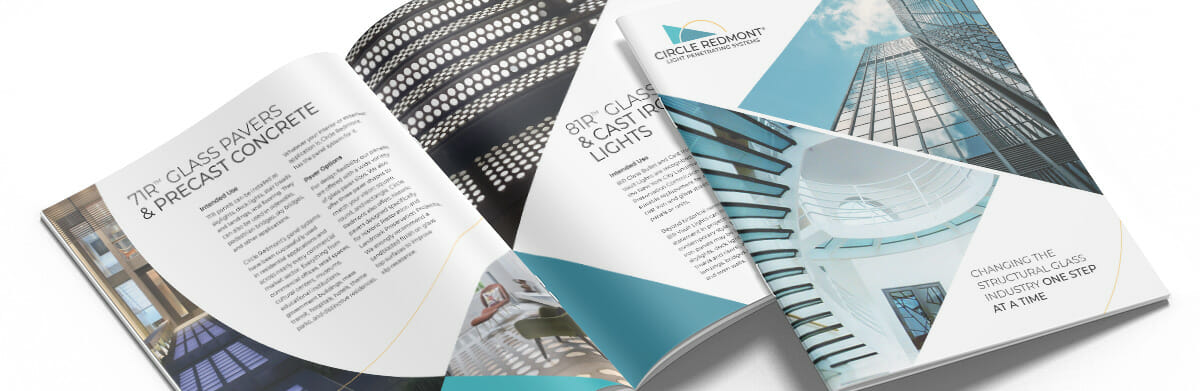
- 81R™ Glass Bullet & Cast Iron Vault Light Systems: Prismatic bullet glass set in cast iron panels, the closest match to historic sidewalk lights, available with customizable finishes and optional backlighting.
- 71R™ Vaulted Sidewalk Precast Concrete Systems: Glass Pavers cast into precast concrete panels, with glass customizable in shape, color, and surface finish.
- 82R™ Glass Bullet Composite Cast Iron Vault Light Systems: Composite cast iron and glass bullet assemblies are non-load-bearing and built for walls and ceilings applications.
- 91R™ Structural Glass Paver & Metal Systems: Modular steel and glass panels suited to modern or industrial architecture where a steel framework fits the architecture.
Bring Daylight Back To Your Sidewalk
Sidewalk lights have evolved to survive more than a century of foot traffic, weather, and changing building codes for a reason. They solve a problem that electricity still can’t fully replace: free, natural daylight in a space that has none.
If you’re restoring a historic storefront or designing a new below-grade space, Circle Redmont’s team can help you figure out which vault light system fits the job. Reach out to the design team to talk through your project.